Pathways
What brings you to AOR today?
Choose the pathway that best reflects your organization. Every pathway connects to the same clinical, documentation and operational infrastructure.
The Problem
Advanced wound care fails on infrastructure, not intent.
Most programs have capable clinicians and quality products. What is missing is the connective layer that makes the work consistent, measurable and defensible.
Core Differentiator
From Medical Distribution to Clinical Infrastructure
The distinction is not the catalog. It is the operating model behind it.
Products are one component. AOR connects the program around them.
“We do not simply ask what you want to order. We help determine what your program needs to move forward responsibly.”
See where your wound-care program stands today.
A structured baseline across five dimensions, with strengths, opportunities and a recommended next step.
People, Not Just Platforms
Built around the clinicians who carry the program.
Infrastructure only matters if the people delivering care can use it. Every layer of AOR is designed with the clinical and operational team in the room.
Clinical leadership at the table
Program design begins with the clinicians and operational leads who will actually run it, not with a catalog conversation.
A shared view of the program
Readiness findings, documentation structure and workflow decisions are reviewed together so every role understands the standard.
Structured review, not one-off visits
Implementation continues through defined review cycles with the same team, so decisions stay grounded in the program's reality.

The Ecosystem
One Ecosystem. Multiple Layers of Intelligence.
Each layer is useful on its own and compounding together. Select any layer to review what it covers.
Solutions
Capability delivered where the program actually operates.
Seven service layers that can be deployed individually or as a coordinated implementation.

Measurement and documentation that fit the workflow clinicians already have.
Digital measurement and structured documentation are designed around point-of-care reality: consistent capture, reviewable structure and a program record that holds up to internal review.
Advanced Biologic & Synthetic Products
Choose products against the clinical profile of your program.
How it worksHide detail
Category access matched to wound etiology, care setting and documentation capability.
Digital Wound Measurement
See wound trajectory the same way at every visit.
How it worksHide detail
Standardized capture of dimensions and imaging so healing trajectory is comparable across visits.
Documentation Intelligence
Keep the record consistent across clinicians and sites.
How it worksHide detail
Template architecture, narrative structure and capture checkpoints built into existing workflows.
Point-of-Care Technologies
Use tools your staff will actually adopt at the bedside.
How it worksHide detail
Bedside and clinic technologies selected for practical adoption, not demonstration value.
Provider Implementation
Give clinicians and staff one shared standard of practice.
How it worksHide detail
Clinician and staff enablement covering assessment consistency and protocol adherence.
Operational Analytics
Manage the program with signal instead of assumption.
How it worksHide detail
Program-level visibility into utilization, throughput, follow-up and capability gaps.
Institutional Strategy
Scale one operating standard across locations and settings.
How it worksHide detail
Program design for groups, post-acute organizations and strategic partners scaling across sites.
Not sure where your program stands?
The readiness assessment maps your current capability across five dimensions in about eight minutes.
Clinical Use Cases
Built for the wound types that place the greatest demands on clinical teams.
AOR connects product access, measurement, documentation and implementation around the operational realities of complex wound care.

Diabetic Foot Ulcers
Program needs
- Serial wound measurement
- Off-loading coordination
- Vascular and infection-risk awareness
- Consistent documentation
AOR layers
Digital Measurement · Documentation Intelligence · Advanced Products · Provider Implementation
Venous Leg Ulcers
Program needs
- Compression-plan coordination
- Edema and skin-status tracking
- Serial measurement
- Adherence documentation
AOR layers
Digital Measurement · Documentation Intelligence · Operational Analytics · Provider Education
Pressure Injuries
Program needs
- Staging consistency
- Pressure redistribution workflow
- Tissue and drainage documentation
- Interdisciplinary follow-up
AOR layers
Documentation Intelligence · Point-of-Care Technology · Provider Implementation · Outcomes Visibility
Surgical & Traumatic Wounds
Program needs
- Structured baseline capture
- Serial progress review
- Care-transition coordination
- Documentation continuity
AOR layers
Digital Measurement · WoundVault · Operational Coordination · Provider Implementation
Non-Healing Chronic Wounds
Program needs
- Barrier identification
- Longitudinal measurement
- Escalation criteria awareness
- Multidisciplinary program review
AOR layers
Wound Intelligence Core · Documentation Intelligence · Advanced Products · Institutional Strategy
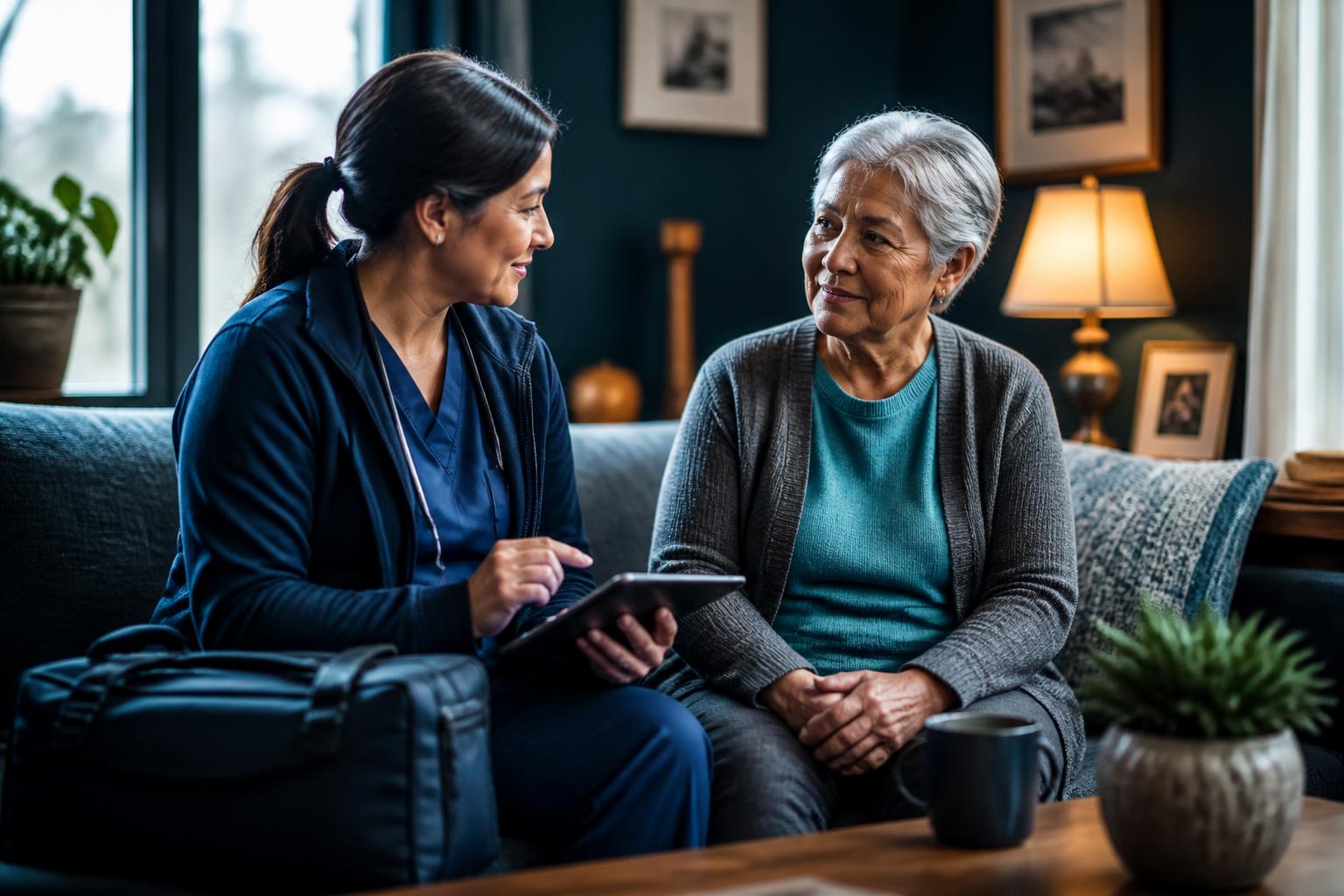
The same standard, wherever care is delivered.
Clinic, hospital, post-acute setting or the patient's home: measurement, documentation structure and product framework stay consistent so program quality does not depend on location.
Informational program framework only. Clinical decisions remain with the treating licensed clinician and applicable manufacturer labeling, payer policy and organizational protocol.
How It Works
A six-stage path from baseline to measurable program.
Each stage has a defined output. Nothing advances on assumption.
Assess
Establish an objective baseline of clinical, documentation, operational, technology and implementation readiness.
- Structured readiness assessment
- Capability scoring across five dimensions
- Gap identification with no patient information collected
For Organizations
Pathways built around how your organization actually delivers care.
Engagement models differ by setting. The underlying standard does not.

Medical Practices
Single-site and multi-provider practices formalizing an advanced wound-care service line.
Typical focus
Documentation structure, product framework, clinician training
Mobile & Home-Based Providers
Field-based clinicians who need consistent capture and product logistics outside a fixed clinic.
Typical focus
Point-of-care capture, routing discipline, wastage logging
Hospitals & Health Systems
Institutional programs coordinating wound care across departments, service lines and care transitions.
Typical focus
Interdisciplinary review structure, documentation consistency, program oversight
Post-Acute Organizations
Skilled nursing, long-term care and rehabilitation settings managing chronic wound populations.
Typical focus
Protocol standardization, staff enablement, trend reporting
Medical Groups
Multi-site groups seeking one operating standard across locations and specialties.
Typical focus
Cross-site benchmarking, template governance, rollout sequencing
Health Plans & Strategic Partners
Organizations evaluating wound-care program quality, consistency and operational maturity.
Typical focus
De-identified program insight, capability maturity mapping
Manufacturers
Product organizations seeking responsible clinical placement and structured implementation support.
Typical focus
Clinical fit frameworks, provider education, adoption visibility
Institutional strategy, discussed with the people accountable for it.
Clinical leadership, operations and executive sponsors review the same program picture: documentation structure, implementation sequence and the operational measures that keep a wound-care service line coherent across sites.

Ready to review your program with our team?
Start with the readiness assessment, or contact us directly to discuss your organization's wound-care operations.
Evidence Library
Clinical and operational evidence, released under controlled review.
Materials are prepared deliberately. Nothing is published before it is reviewed.
Category-level summaries covering indications, handling considerations and documentation expectations.
- Biologic category overview — in preparation
- Synthetic matrix category overview — in preparation
- Advanced dressing selection framework — in preparation
Clinical and operational evidence resources are being prepared through controlled review.
Available now
Informational summaries you can read on this page. They describe how AOR structures a program — they are not research publications.
Advanced Wound-Care Program Readiness Brief
Explains the five readiness dimensions AOR reviews — clinical, documentation, operational, technology and implementation — who a baseline is intended for, and how an organization can use its own baseline internally to prioritize work.
September 2026
Documentation & Audit-Readiness Framework
Describes serial measurement, consistent wound descriptors, care-plan rationale, consent and workflow artifacts, and how organizations can organize internal review readiness. Informational only; not billing, legal or compliance certification.
September 2026
Clinical Use Cases Overview for Healthcare Organizations
Summarizes the five wound categories presented on this site and the operational infrastructure layers AOR can help organize around each of them.
September 2026
Informational only. These summaries are not peer-reviewed research, clinical guidance, billing, legal or compliance certification, and they carry no approval by any clinician, attorney, payer, FDA or CMS.

Américo Ortiz Rivera
Founder & Chief Executive Officer
Message from Our Founder
Wound care deserves infrastructure, not improvisation.
“I built AOR Medical Solutions because clinicians were being asked to carry the weight of a system that never gave them structure. Products arrived. Support did not. Our work is to hand providers a program they can defend—clinically, operationally and on the record—so their judgment is supported by infrastructure instead of undermined by it.”
Américo Ortiz Rivera
Founder & CEO, AOR Medical Solutions
See where your wound-care program stands today.
The AOR Wound-Care Readiness Assessment™ returns a scored baseline across five dimensions, with tailored strengths, opportunities and a recommended next step.
No patient information is requested at any point.